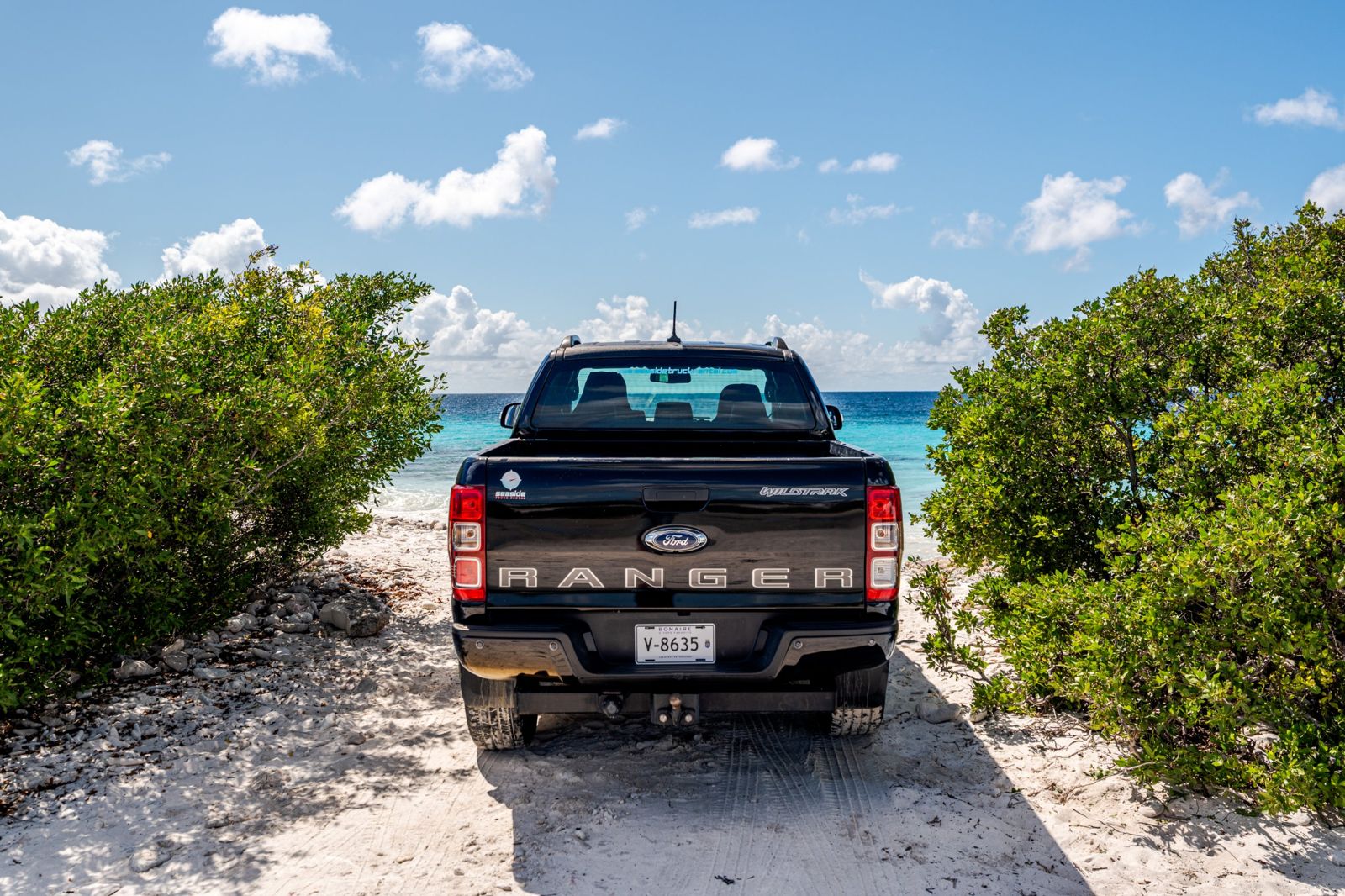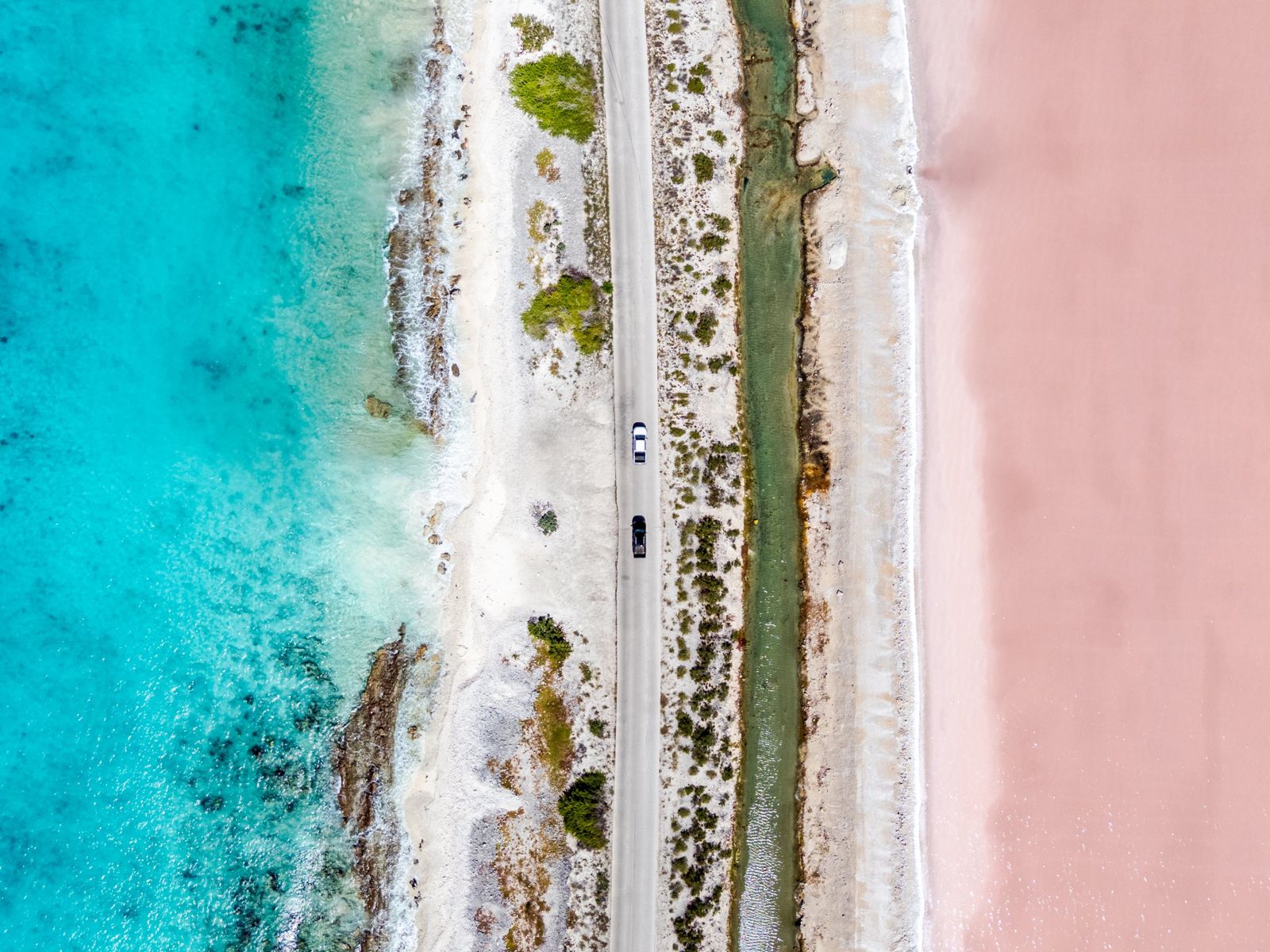
Bonaire makes shore diving feel almost unfairly easy. You spot a yellow stone by the road, park near the sea, gear up beside your vehicle, walk in, and the reef starts close to shore. No boat timetable. No crowded deck. No waiting for a group to finish breakfast before the first dive.
That freedom is exactly why the vehicle matters so much.
For most divers, a standard rental car looks fine until the first wet BCD, sandy booties, dripping wetsuit, and full tanks enter the picture. A pickup truck fits the way Bonaire diving actually works: simple, flexible, wet, salty, and repeated several times a day.
Why Bonaire is built around shore diving
Bonaire is one of the world’s best-known shore diving destinations for a reason. Along much of the west coast, dive sites are marked by yellow painted stones. These stones make the system simple: drive along the coast, choose a site, park safely, gear up, and enter the water from shore.
That setup gives divers rare independence. You can plan an early morning dive, take a long surface interval, head south for a wreck dive, then finish the afternoon on a shallow reef without booking a boat.
The rhythm usually looks like this:
- Pay the STINAPA Nature Fee.
- Pick up tanks from a dive shop or resort.
- Choose a marked shore dive site.
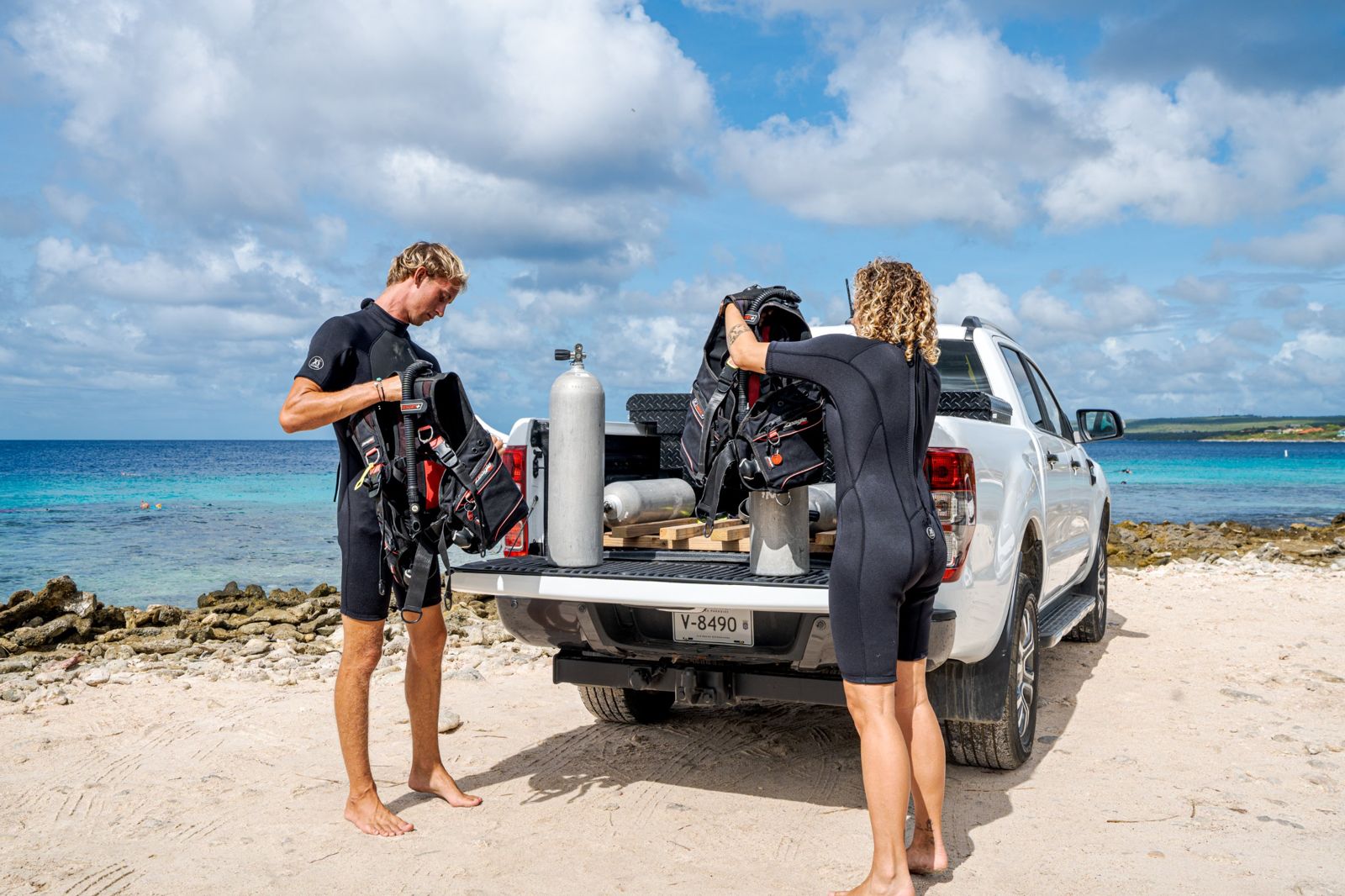
- Gear up at the vehicle.
- Dive, rinse, rest, and repeat.
The reefs are close enough that many dives start with a short walk over coral rubble, stone, sand, or an ironshore entry. Once in the water, the drop-off often comes quickly. That is part of the appeal. It is also why divers need a practical base on wheels.
A pickup becomes your gear station, rinse station, tank carrier, shade stop, and snack break point. On Bonaire, the road and the reef are connected.
How shore diving on Bonaire works in practice
Before shore diving, every diver needs to follow the local rules and protect the marine park. Bonaire’s reef system is special, but it is not self-protecting. Good shore diving starts before you touch the water.
Pay the STINAPA Nature Fee
Divers must pay the STINAPA Nature Fee. The fee is commonly listed as $40 per person, valid for the calendar year, and it supports Bonaire National Marine Park and Washington Slagbaai National Park.
The easiest approach is to buy it online before travelling. That saves time after arrival and makes the first dive day smoother.
Collect your tanks
Many dive shops and dive resorts on Bonaire are set up for independent shore divers. Drive-through tank refill systems are common, which means you can load tanks, swap empties, and get back on the road without carrying cylinders through a lobby.
Well-known dive centres include those at Buddy Dive, Captain Don’s Habitat, and VIP Diving. Independent operators such as Dive Friends Bonaire also support shore divers with tanks, weights, maps, and local advice.
Always check the shop’s current procedures, opening hours, and rules when you arrive. Tank logistics are easy on Bonaire, but they still work best with a plan.
Choose your coast
The west coast is the main shore diving zone. North of Kralendijk, the coastline leads toward sites such as Karpata, with dramatic reef structure and clear blue views. South of town, the coastline opens into the salt pan area, with long flat reefs, Salt Pier, and the Hilma Hooker wreck.
Not every site suits every diver on every day. Wind, waves, entry conditions, current, and visibility can change. If you are unsure, ask a local dive shop for current site advice.
Park and prepare carefully
At many shore sites, there is no pier, bench, or changing room. Your vehicle is your staging area. That is where you assemble gear, check gas, secure valuables, hydrate, and brief the dive.
This is the point where a pickup truck starts to feel less like a rental upgrade and more like basic dive equipment.
Why a pickup beats a car for diving
A hatchback or small SUV can get you from A to B. A pickup helps you actually dive.
Wet dive gear is heavy, salty, and awkward. Tanks roll. BCDs drip. Fins bring sand into every corner. Wetsuits never seem to dry between dives. A closed car turns all of that into a mess.
A pickup solves the main problems at once.
| A regular car | A pickup truck |
|---|---|
| Wet gear sits in the cabin or boot. | Wet gear rides in the open cargo bed. |
| Tanks can roll if they are not secured well. | Tanks can be held upright in a rack. |
| Seats absorb salt water and sand. | The cabin can stay clean and dry. |
| Gear smells stronger after a full dive day. | Airflow helps wet items drain and dry faster. |
| Loading takes more bending and rearranging. | The open bed makes tanks and crates easier to handle. |
The biggest benefit is separation. People sit in the cabin. Gear stays in the bed. That sounds simple, but after three dives in the sun, it makes a real difference.
A pickup also gives you working space. You can lay out fins, masks, reels, SMBs, camera gear, save-a-dive parts, and water bottles without turning the back seat into a wet puzzle.
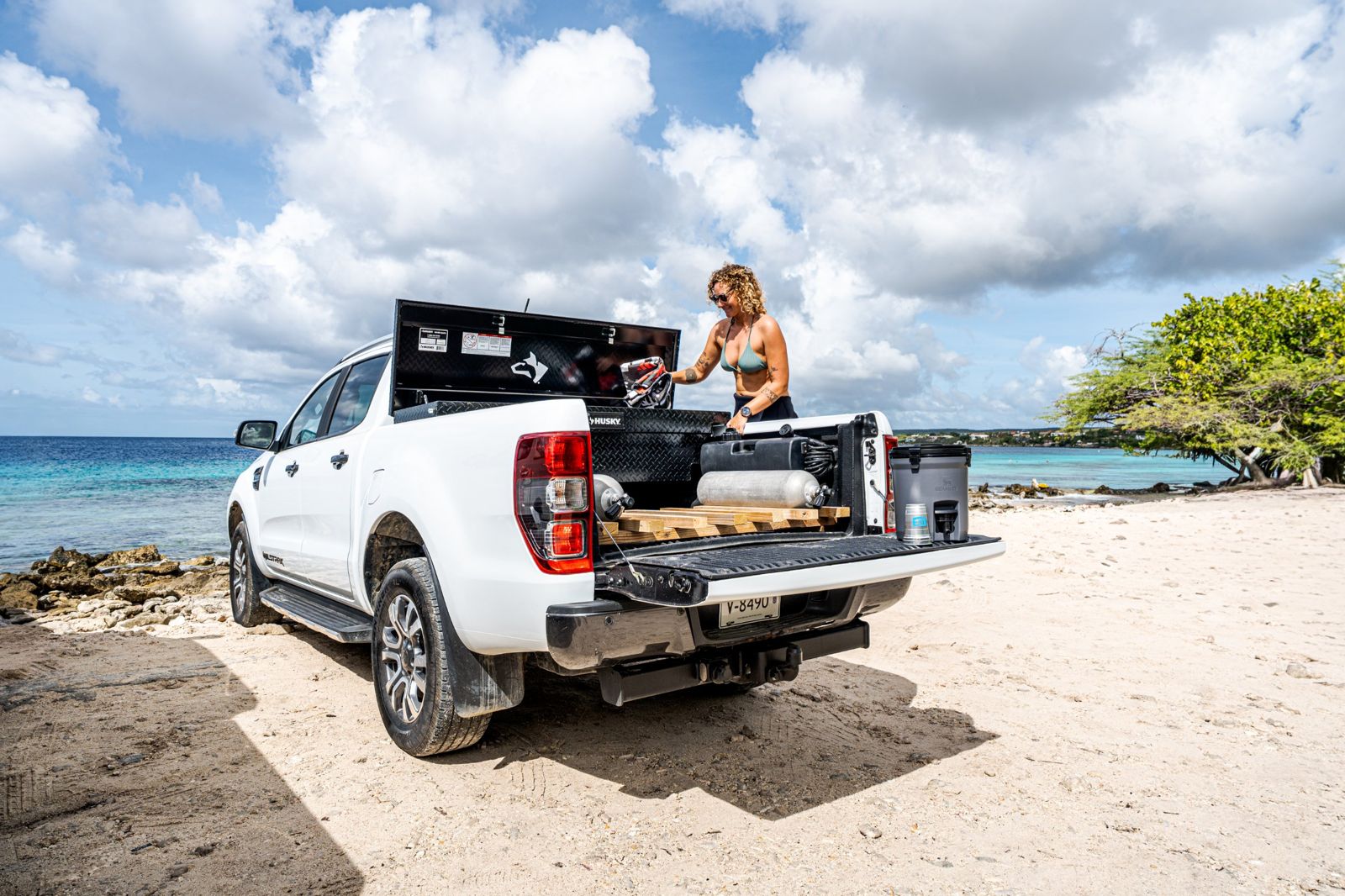
What makes our Ford Ranger Shore Dive Edition practical
A normal pickup is already useful on Bonaire. A dive-ready pickup goes further. Our Ford Ranger Shore Dive Edition is designed around the details that matter between dives.
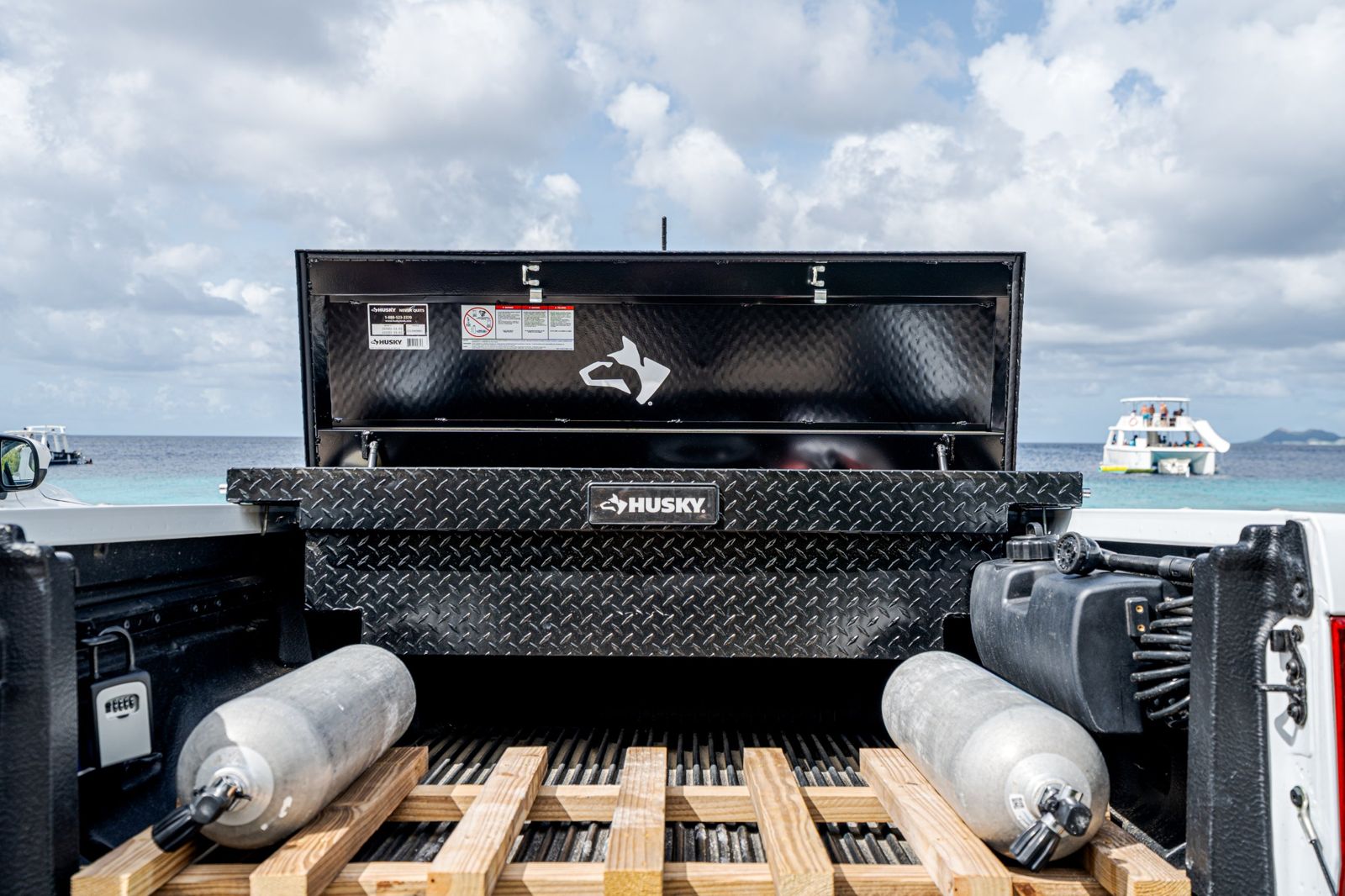
The tank rack keeps cylinders under control
Tanks are heavy, round, and not something you want sliding around. A dedicated dive tank rack keeps them upright and secure on the coast road.
That matters when moving between sites, stopping for groceries, or driving over uneven ground near entry points. It also makes loading and unloading more orderly, especially when there are multiple divers sharing the vehicle.
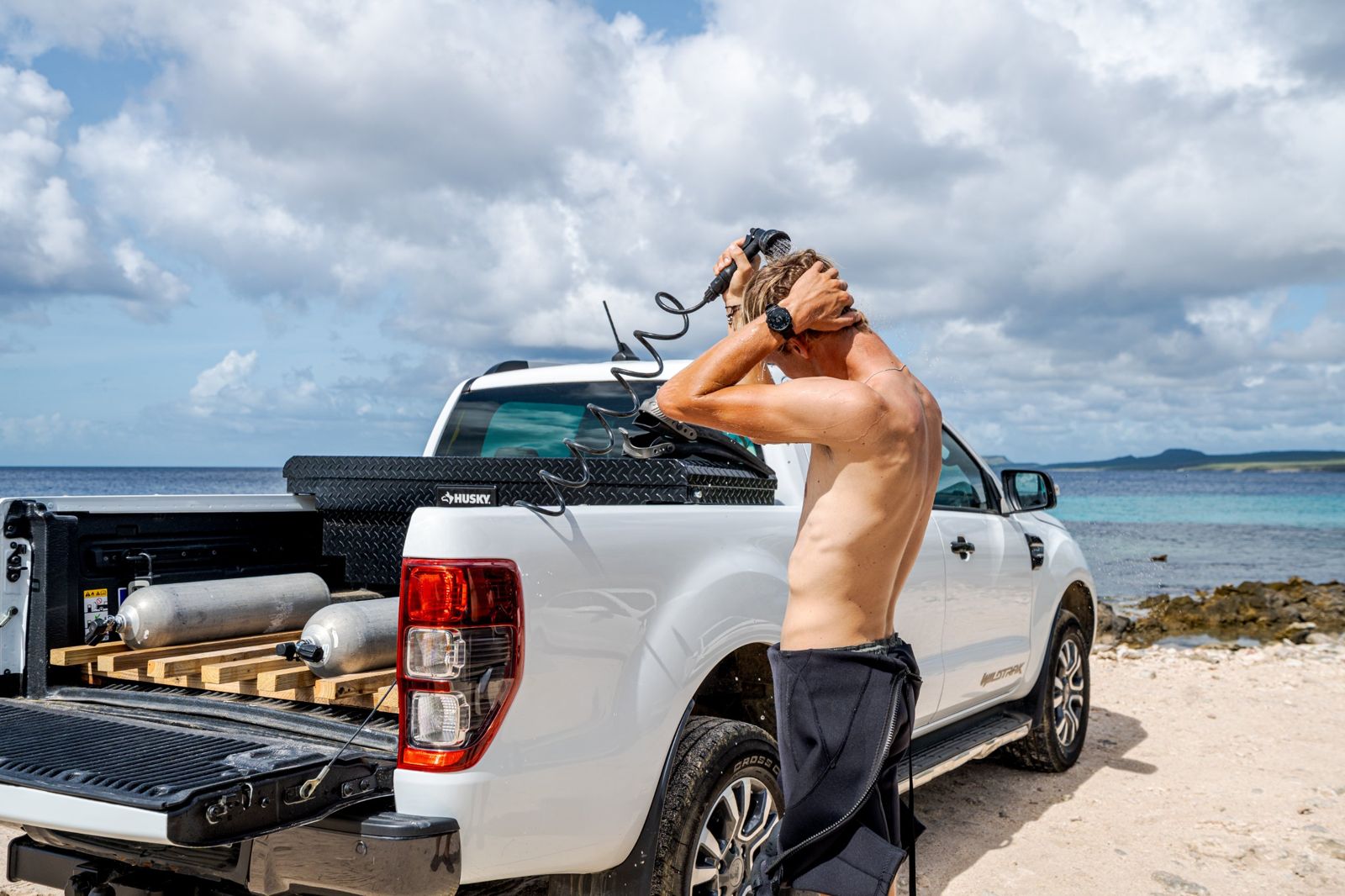
The on-board shower helps remove salt fast
Salt water dries quickly in Bonaire’s sun. If it stays on your skin, mask, computer, camera housing, and zippers, it becomes uncomfortable and can be hard on gear.
An on-board shower lets you rinse after every dive without searching for facilities. Use it for your face, hands, booties, wetsuit neck, camera rinse, or a quick freshwater rinse before climbing back into the cabin.
It will not replace a full gear wash at the end of the day, but it helps a lot between dives.
The key locker avoids a classic shore diving problem
Every shore diver eventually asks the same question: what do we do with the car key?
Taking it underwater is risky unless the key is fully waterproof and pressure-safe. Hiding it under a rock is not smart. Leaving it in a bag on shore is no better.
A key locker gives divers a simple solution. Lock the vehicle key securely before the dive, then retrieve it when the team returns. It keeps the process calm and avoids improvising at the shoreline.
Waterproof seat covers protect the cabin
Between dives, nobody is perfectly dry. Even if you towel off, wetsuits, rash guards, hair, and sandals keep dripping.
Waterproof seat covers let you move to the next site without soaking the upholstery. They also make the vehicle more forgiving after a long day of salt, sunscreen, and sand.
The hydration station matters more than people think
Bonaire is sunny, dry, and warm. Shore diving adds lifting, walking, gearing up, and exposure before and after each dive.
A hydration station with drinking water keeps water within reach throughout the day. That sounds small, but it supports better dive planning. Divers who drink regularly, rest properly, and avoid rushing usually make better decisions.
What to pack for a Bonaire shore diving day
A good shore diving setup is not complicated. The goal is to avoid wasting time, reduce stress, and keep gear safe.
Pack with repeated dives in mind, not just the first entry.
Dive essentials
Bring the standard gear required for your experience level, certification, and dive plan. For most shore divers, that includes:
- Mask, fins, snorkel, and booties
- BCD and regulator set
- Dive computer and backup timing or depth option if needed
- Exposure suit or rash guard
- Weights and weight pockets or belt
- Surface marker buoy and spool
- Cutting tool where allowed and appropriate
- Compass for navigation
- Reef-safe sun protection
Booties are especially useful. Some entries involve coral rubble, rock, or uneven surfaces. Bare feet are a bad idea at many sites.
Truck and shore comfort items
The vehicle setup matters almost as much as the dive gear.
Useful items include:
- Towels for seats and dry hands
- Dry bag for phones, wallets, and documents
- Mesh bag for wet gear
- Spare mask strap and fin strap
- O-rings and basic save-a-dive kit
- Snacks for surface intervals
- Plenty of drinking water
- Hat and sunglasses
- Lightweight shirt for sun protection
- Small first aid kit
Keep the gear area organised. Put wet gear in one zone, dry items in another, and valuables out of sight. Even in a relaxed destination, basic common sense still applies.
Where a pickup helps most on Bonaire
A pickup is useful everywhere, but some Bonaire dive days show its value more clearly.
Southern dive sites with long open stretches
The south coast near the salt pans has long roads, open views, and several popular shore diving options. Divers often combine multiple sites in one route. A pickup makes it easy to carry extra tanks, water, towels, and snacks without repacking the whole vehicle after each stop.
Salt Pier and the Hilma Hooker area are classic examples of why mobility matters. Conditions, access, and permission rules can vary, so check local guidance before planning the dive. If one site is not suitable, you can move on without losing the whole morning.
Northern sites with rougher access
North of Kralendijk, the coastline becomes more rugged in places. The drive toward sites such as Karpata offers beautiful views, but gear handling is still physical. Tanks, weights, cameras, and fins all need to move from vehicle to entry point and back again.
An open truck bed makes this part easier. It also keeps the cabin from filling with water and grit after every entry.
Multi-dive days
This is where the pickup really earns its place. One shore dive is manageable in almost any vehicle. Three or four dives with wet gear, empty tanks, full tanks, snack stops, and changing conditions are different.
A pickup supports the way divers actually move during the day. It is less about luxury and more about workflow.
Safety and etiquette at shore dive sites
Bonaire’s shore diving freedom comes with responsibility. There is no boat crew watching every step. Divers need to plan well and respect the island.
Before entering, check the water from shore. Look at waves, surge, current, and exit points. If the exit looks difficult before the dive, it may feel worse after an hour underwater.
Keep these habits in place:
- Dive within your certification and comfort level.
- Do a full buddy check before every entry.
- Mark your exit point from the water.
- Avoid standing on coral or touching marine life.
- Secure loose gear before crossing rocks or rubble.
- Give other divers space at tight entries.
- Do not leave trash at shore sites.
- Never leave valuables visible in the vehicle.
The best shore divers on Bonaire are not the ones who rush through the most sites. They are the ones who leave every reef, entry point, and parking area as they found it.
Good etiquette also means being realistic. If a site is busy, choose another one. If the wind has changed, ask for advice. If the team is tired, stop. Bonaire rewards flexible divers.
How to plan an easy shore diving day
A relaxed Bonaire dive day starts with less ambition and more margin.
Begin early if possible. The sun is lower, parking can be easier, and the first dive feels calmer. Pick up tanks the day before if your dive operator allows it, or start with a drive-through refill in the morning.
Choose two or three realistic sites instead of trying to cover the entire coast. Group sites by area. For example, spend one day north of Kralendijk and another day south toward the salt pans. This saves time and reduces unnecessary driving.
A simple plan might look like this:
| Time | Plan |
|---|---|
| Morning | Pick up tanks and do the first shore dive. |
| Late morning | Rinse, hydrate, snack, and change tanks. |
| Midday | Choose a second nearby site based on conditions. |
| Afternoon | Do an easy shallow dive or return gear for a full rinse. |
Leave room for changes. That is the point of shore diving. If the sea looks rough, move. If a site feels crowded, keep driving. If the team wants a longer break, take it.
A pickup supports that freedom because the gear is already packed for movement.
Why the right vehicle changes the whole trip
Bonaire shore diving is not only about what happens underwater. A lot of the experience happens between dives: choosing the next site, opening the tailgate, rinsing salt off your face, drinking cold water, comparing fish sightings, and deciding whether there is time for one more reef.
A pickup truck fits those moments.
It keeps wet gear where it belongs. It carries tanks safely. It gives divers room to work. With practical features like a tank rack, on-board shower, key locker, waterproof seat covers, and hydration station, a dive-ready Ford Ranger turns a rental vehicle into part of the dive plan.
That is why pickups are everywhere at Bonaire’s yellow stones. They match the island’s diving style: independent, practical, and reef-focused.
If you are planning shore diving in Bonaire, do not treat the vehicle as an afterthought. Choose the truck that makes the day easier from the first tank to the final rinse.
Ready to explore the island?
Book your Ranger